Guide
Fall prevention at home
Falls at home can happen fast, and it is normal to feel worried. Simple changes and the right kind of private-pay in-home help can make daily life safer and easier.
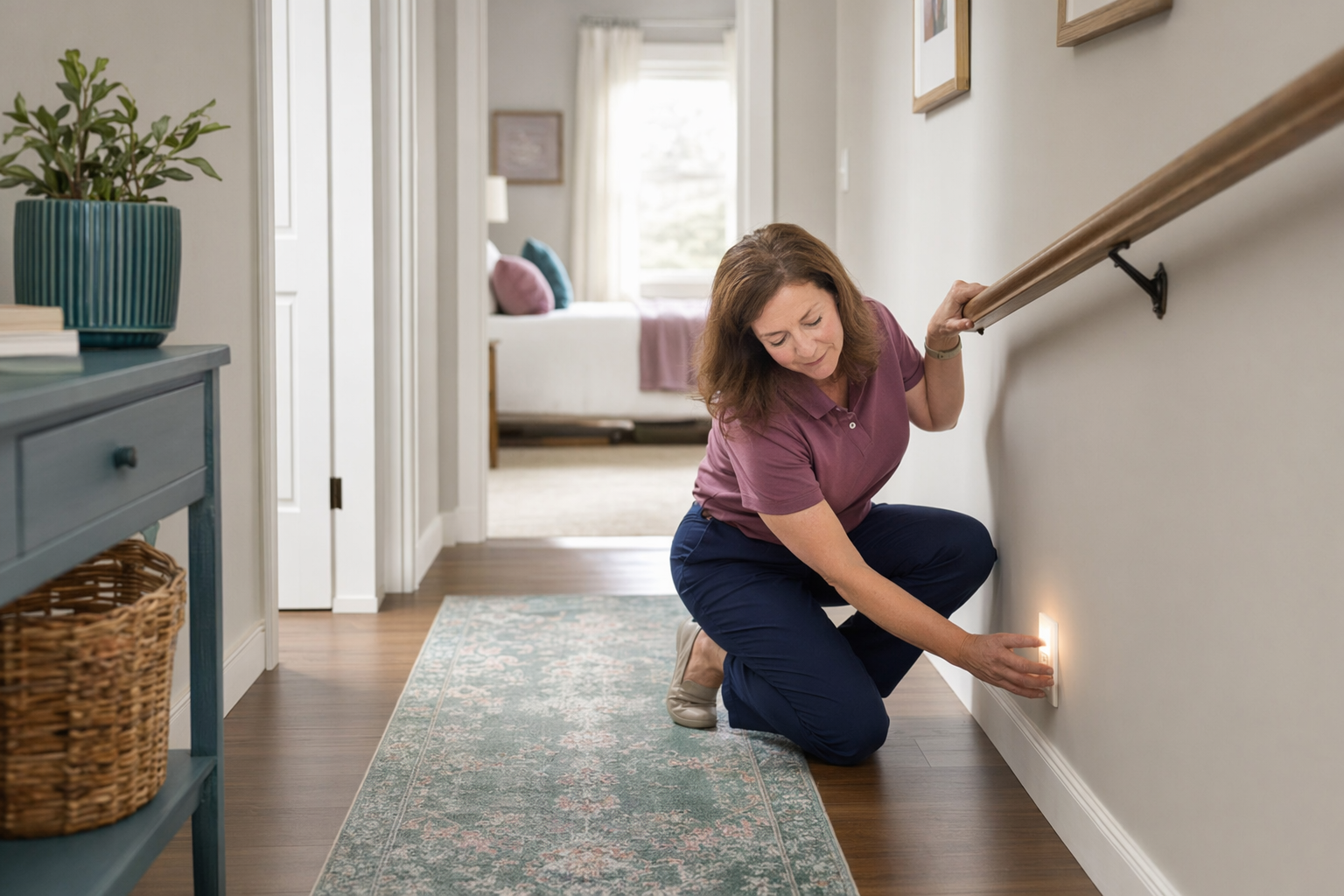
Why falls happen at home
Many falls happen during everyday tasks like getting out of bed, walking to the bathroom, or carrying laundry. Risk can go up when a home has poor lighting, loose rugs, clutter, slippery floors, or stairs without a sturdy handrail.
Age, weakness, balance changes, pain, and feeling rushed can also make a person less steady. If your parent or partner is becoming more cautious, that may be a sign they need more support at home.
A fall is often not just about the floor or the furniture. It is usually a mix of the home setup and how much help the person has during the day.

Small changes that can help right away
You do not have to fix everything at once. Start with the places your loved one uses most: the bedroom, bathroom, kitchen, and entryway.
Simple steps often include better lighting, removing throw rugs, clearing walkways, keeping cords out of the way, and making sure shoes fit well and have non-slip soles. A shower chair, grab bars, and a raised toilet seat may also help, depending on the person and the home.
It can help to keep commonly used items within easy reach so your loved one does not have to stretch, bend, or climb. If you are unsure what to change first, focus on the spots where a fall would be most likely.
How private-pay in-home care can reduce fall risk
Private-pay, non-medical in-home care can add a steady human presence. That often makes a big difference for someone who is unsteady, tired, or anxious about moving around alone.
A companion can help with light support such as reminding someone to use a walker, walking with them around the house, or keeping the home neat and clear. Homemaking help can include cooking, laundry, tidying, and errands. Personal-care help can include bathing, dressing, and safe mobility support. Respite care is short-term help that gives a family caregiver a break.
For some families, overnight or live-in support is helpful when falls happen at night or when someone should not be alone for long stretches. Care Alongside is a free matching service, not a home-care agency, and we help families find private-pay in-home care that fits their needs and language.
What this kind of care can and cannot do
In-home care can lower day-to-day risk by adding supervision, routine, and hands-on help with ordinary tasks. It can also reduce the chance that your loved one tries to do too much alone.
It is important to be honest, though: no caregiver can prevent every fall. The goal is safer daily support, not a guarantee. If a person seems suddenly much weaker, confused, or unsteady, that is a medical concern, and a doctor should be contacted.
If you are comparing options, a good place to start is how to choose a home care provider. You can also learn more about private-pay support on our guides page.
What families usually pay
Private-pay in-home care is usually billed by the hour, and prices vary a lot by city, state, hours needed, and the level of help. Typical US ranges are about $25-$40 per hour for companion or homemaker help, and about $28-$45 per hour for personal-care aide support.
If someone needs live-in or 24-hour support, families often see higher daily costs, sometimes around $300-$450 per day or more depending on the area and schedule. Many families spend a few hundred to a few thousand dollars a month, depending on how many hours they use.
These are only planning ranges, not quotes. To see what may fit your budget and language needs, you can get matched with options that are a fit for your family.
Fall prevention at home usually means making the house safer and adding steady non-medical help so your loved one can move around with more support and less risk.
Questions families ask
What is the first thing I should do if my parent keeps falling?
Can an in-home caregiver stop falls completely?
Do I need medical care or non-medical care for fall prevention?
Can I find caregivers who speak my family’s language?
Keep reading
How Much Does In-Home Care Cost?
How Much Does In-Home Care Cost? — clear, honest information for families comparing private-pay
Read more →GuideHow to Pay for In-Home Care
How to Pay for In-Home Care — clear, honest information for families comparing private-pay in-ho
Read more →GuideLong-Term Care Insurance & Home Care
Long-Term Care Insurance & Home Care — clear, honest information for families comparing private-
Read more →Find the right help, with someone in your corner
Tell us what your family needs. We'll match you, free, with vetted in-home care providers near you — including ones who can speak your language. No medical records, no pressure.
Get matched, freeFree for families. No medical records. No pressure.