Guide
In home care after surgery
After surgery, the first days at home can feel overwhelming. Private-pay in-home care can help with meals, bathing, dressing, rides, and a steady presence while your loved one rests and recovers.
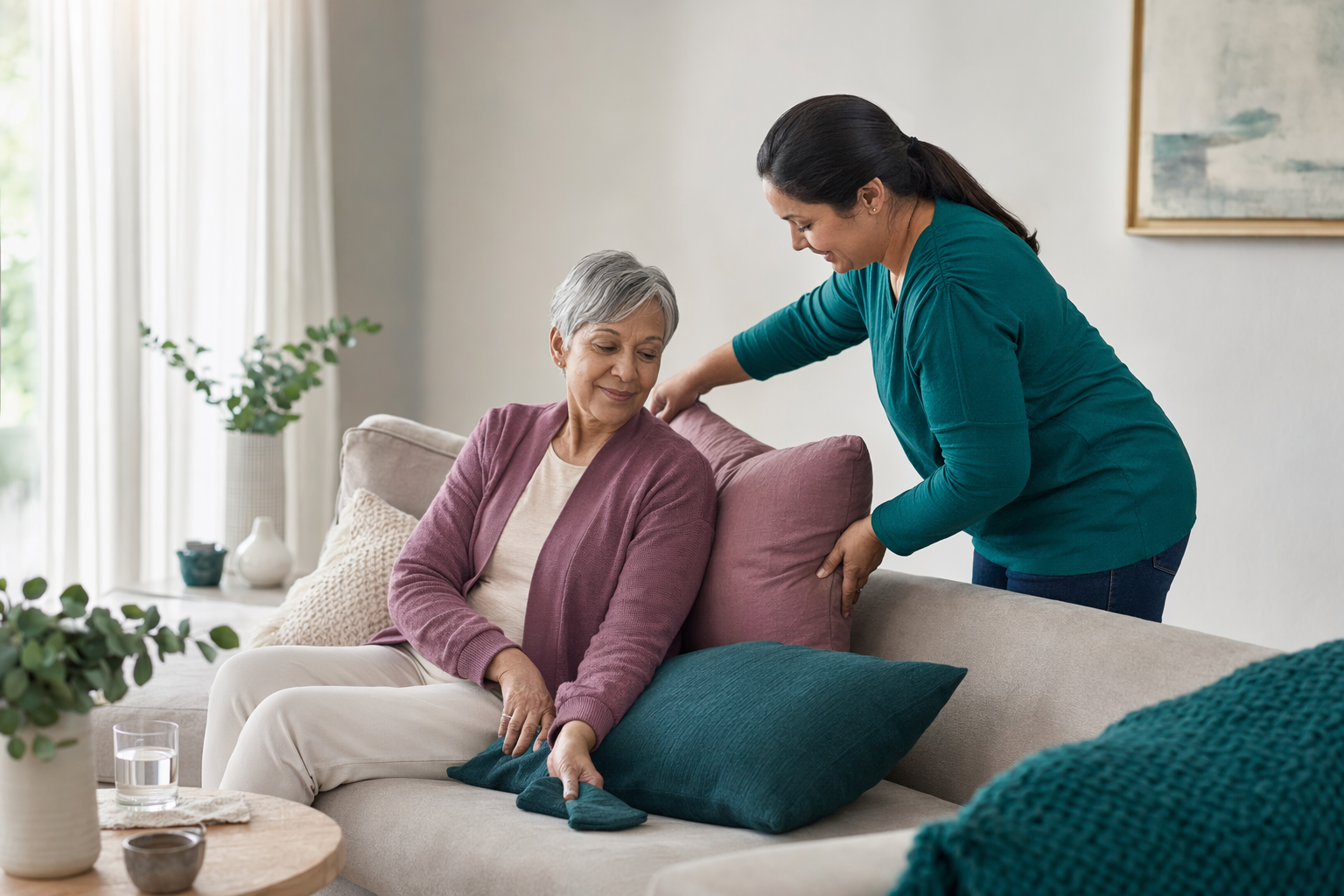
What in-home care can help with after surgery
In-home care after surgery is non-medical help at home. It can include companionship, light housekeeping, meal prep, errands, laundry, help getting in and out of bed, bathing, dressing, and mobility support.
Some families also use respite care, which means short-term help that gives the family caregiver a break. Others arrange overnight care or live-in care if the first few nights feel especially hard.
This kind of help is often useful when the person is weak, unsteady, tired, or simply not ready to manage the house alone. It is about making daily life safer and easier during recovery.

What private-pay care usually costs
Costs vary by city, state, hours, and the level of help needed. As a general guide, companion or homemaker help often runs about $25-$40 per hour. Personal-care aide support is often about $28-$45 per hour. Live-in or 24-hour care may run about $300-$450 per day.
Many families spend a few hundred to a few thousand dollars a month, depending on how much care they use. These are only typical ranges, not quotes. The real cost depends on the agency or provider, the schedule, and local market rates.
If you want help thinking through what might fit your budget, see general cost guidance.
How to think about the right level of help
Start with the basics: Does your loved one need help for a few hours a day, or around the clock? Do they need only meals and errands, or also help with bathing, toileting, and getting around safely?
It can help to write down the hardest parts of the day. For example: mornings, bathroom trips, meal times, stairs, or getting settled at night. That list can make the next step clearer.
If you are unsure, that is normal. Many families begin with a smaller plan and add more hours if needed.
How to choose a trustworthy provider
Look for clear communication, careful screening, and a plan that fits your family. Ask how caregivers are matched, whether they are trained for personal care, and how the provider handles schedule changes or call-outs.
It is also wise to ask for references, service details, and pricing in writing. If your family speaks a language other than English, ask whether caregivers who speak that language are available. That can make a big difference in comfort and trust.
For a simple checklist, visit how to choose a home care provider.
How Care Alongside can help
Care Alongside is a free matching service, not a home-care agency. We help families in the US understand private-pay, non-medical in-home care and find providers that may fit their needs, schedule, and language preferences.
We do not arrange Medicare home health or Medicaid services. Those are separate programs. If you are trying to understand those benefits, speak with the person’s doctor, state program, or SHIP counselor directly.
If you are ready to look for help at home, you can get matched. We keep the first step simple.
After surgery, private-pay in-home care can help with the everyday tasks that make recovery at home safer and less stressful.
Questions families ask
What kind of help can I get after surgery at home?
Is in-home care after surgery covered by Medicare?
How much does post-surgery in-home care cost?
Can I start with just a few hours of help?
Keep reading
How Much Does In-Home Care Cost?
How Much Does In-Home Care Cost? — clear, honest information for families comparing private-pay
Read more →GuideHow to Pay for In-Home Care
How to Pay for In-Home Care — clear, honest information for families comparing private-pay in-ho
Read more →GuideLong-Term Care Insurance & Home Care
Long-Term Care Insurance & Home Care — clear, honest information for families comparing private-
Read more →Find the right help, with someone in your corner
Tell us what your family needs. We'll match you, free, with vetted in-home care providers near you — including ones who can speak your language. No medical records, no pressure.
Get matched, freeFree for families. No medical records. No pressure.