Guide
Keeping a parent safe at home
Keeping a parent safe at home is a real responsibility—and it’s okay to feel overwhelmed. This guide explains private-pay, non-medical in-home care options and how Care Alongside (free) can help you find support in your language.
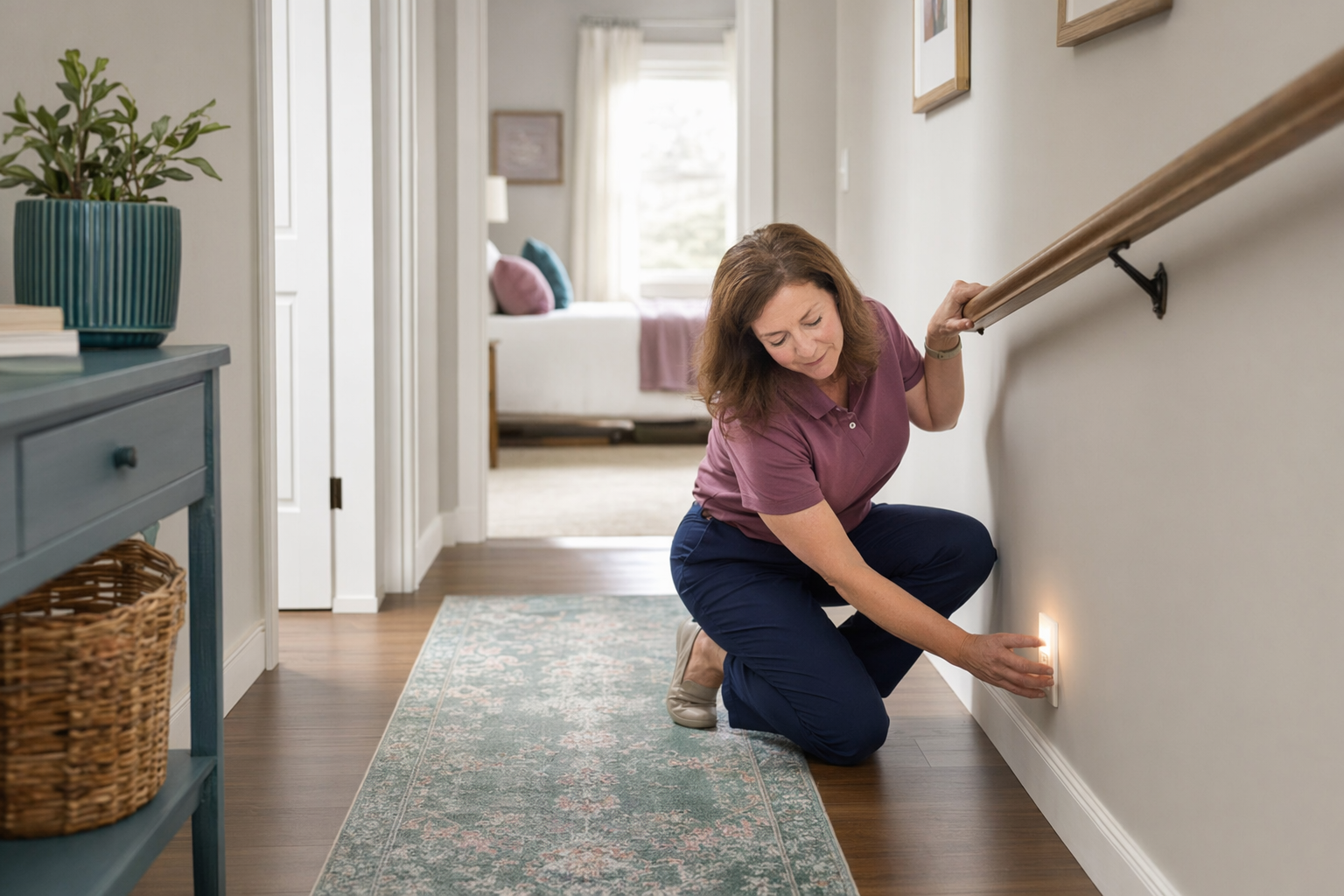
Start with safety: what “safe at home” usually means
When families say “safe at home,” they often mean help that prevents common risks—like falls, missed meals, unsafe bathing, medication mistakes, loneliness that leads to poor routines, or being unable to do everyday tasks.
In private-pay in-home care, support is usually non-medical. A caregiver can offer companionship, help with household tasks, and provide personal-care assistance such as bathing, dressing, and mobility support—plus respite care (short-term help that gives you a break).
Because every home and every person is different, the right plan usually mixes a few types of help and builds a routine around the times when risk is highest (for example, mornings, evenings, or after appointments).

Types of private-pay in-home help (non-medical)
Private-pay, non-medical in-home care can look different depending on the level of help needed. Here are common options families use to support aging parents or loved ones recovering from illness or surgery.
• Companion and homemaker support: conversation, staying engaged, light housekeeping, cooking, laundry, and errands.
• Personal-care help: assistance with bathing, dressing, toileting, and safe transfers (for example, helping someone move from bed to chair with care).
• Mobility and supervision: help with walking support, fall-prevention routines, and watching for safety issues—especially for people who may wander or get disoriented.
• Respite care: short-term shifts or scheduled coverage so the family caregiver can rest, attend an appointment, or handle other responsibilities.
• Overnight and live-in support: overnight help for nighttime needs, or live-in care when families need more continuous coverage.
If you’re not sure where your situation fits, that’s normal. Care Alongside is a free matching + information service, and we can help you think through what “enough support” looks like in day-to-day life.
How to compare costs (typical US ranges, not a quote)
Costs vary a lot by city/state, the number of hours, how much hands-on personal care is needed, and whether you need overnight or live-in support. The best way to plan is to understand typical ranges and then adjust based on your schedule.
As a rough guide, many families see:
• Companion/homemaker help often runs about $25–$40 per hour.
• Personal-care aide support often runs about $28–$45 per hour.
• Live-in or 24-hour care is often discussed in the range of about $300–$450 per day.
Many families spend a few hundred to a few thousand dollars per month depending on hours and care needs. Exact pricing isn’t guaranteed, so consider these ranges a starting point for budgeting—not a final answer.
A safety checklist you can use while you search
Before you hire anyone, it helps to write down the safety risks you’re trying to reduce. A short list makes it easier to explain what support is needed and to compare providers fairly.
Consider questions like:
• Where does the person have the most risk—bathroom, stairs, getting in/out of bed, cooking, driving, or nighttime?
• What routines matter most—meals, hydration, bedtime, exercise, medication reminders (non-medical reminders), or getting to appointments?
• How much help is physical vs. observation—does your loved one need hands-on personal care, or more supervision and prompting?
• What schedule would reduce stress for your family—mornings, evenings, weekends, overnight, or short respite blocks?
Care Alongside can help you translate your needs into clear, practical help categories so you can communicate them well when you contact potential caregivers. For step-by-step tips on picking someone trustworthy, see how to choose a home care provider.
How to choose someone trustworthy (without guessing)
Choosing in-home help is personal. You’re inviting a caregiver into your home, and you deserve to feel confident and respected—especially if you’re arranging care for the first time.
A good starting point is to focus on clarity and fit: make sure the caregiver understands the expected tasks, the schedule, and your safety priorities. You can also ask what experience they have with companionship, homemaking, and personal-care support—staying non-medical and role-specific.
To compare providers, look for ways you can verify reliability and safety through their process (for example, how they handle background checks, training expectations, and references). Then, use a simple trial approach when possible so you can learn how the caregiver communicates and whether the routine works.
If you’d like a guided path, you can start with how to choose a home care provider and then use get matched when you’re ready.
Medicare and Medicaid: what families should know (and what we help with)
Many families first wonder, “Does Medicare or Medicaid cover in-home care?” In the US, Medicare’s home health benefit is limited and typically tied to a doctor’s orders and a specific plan of care. Medicaid programs also vary by state and often have their own rules, eligibility requirements, and provider networks.
Care Alongside is not part of Medicare or Medicaid. We do not arrange, refer for, or coordinate Medicare home health or Medicaid services. We specifically help families with PRIVATE-PAY, non-medical in-home care—things like companionship, homemaking, personal-care help, respite, overnight, and live-in support.
If you want to explore coverage options, it’s a good idea to contact your physician, your state program, or a SHIP counselor directly. In the meantime, if you need immediate, practical support for day-to-day safety at home, private-pay services can be a clear path. You can also browse more cost basics in home care costs.
This guide explains private-pay, non-medical in-home care options and typical costs, plus how Care Alongside (free) can help you match to support that improves safety at home.
Questions families ask
What kinds of help are considered “non-medical” in-home care?
How do I know whether we need a few hours or live-in help?
Can a caregiver help with fall prevention and safely getting around the home?
Is Care Alongside a home-care agency?
How much does private-pay in-home care typically cost?
Do you help with Medicare home health or Medicaid long-term care?
Keep reading
How Much Does In-Home Care Cost?
How Much Does In-Home Care Cost? — clear, honest information for families comparing private-pay
Read more →GuideHow to Pay for In-Home Care
How to Pay for In-Home Care — clear, honest information for families comparing private-pay in-ho
Read more →GuideLong-Term Care Insurance & Home Care
Long-Term Care Insurance & Home Care — clear, honest information for families comparing private-
Read more →Find the right help, with someone in your corner
Tell us what your family needs. We'll match you, free, with vetted in-home care providers near you — including ones who can speak your language. No medical records, no pressure.
Get matched, freeFree for families. No medical records. No pressure.