A family story (anonymized)
Finding help for Mom after a fall
After a fall, it can be hard to know what kind of help is needed at home. This anonymized story shows how one family used Care Alongside to understand their private-pay options and get matched, for free.

When a fall changed the routine
The family first reached out after Mom came home from the hospital and everything felt more uncertain. She could move around some, but the day-to-day tasks were suddenly harder, and her adult children were trying to figure out what kind of help would make home feel safe again.
They did not want to guess. They also did not want to spend hours calling places that did not fit what they needed. They were looking for private-pay, non-medical in-home care: help with things like meals, light housekeeping, errands, bathing, dressing, and getting around the home.
That is where Care Alongside came in. We are a free matching service, not a home-care agency. We do not give medical advice or handle Medicare or Medicaid services. We simply help families understand their options and connect them with providers that may be a good fit.
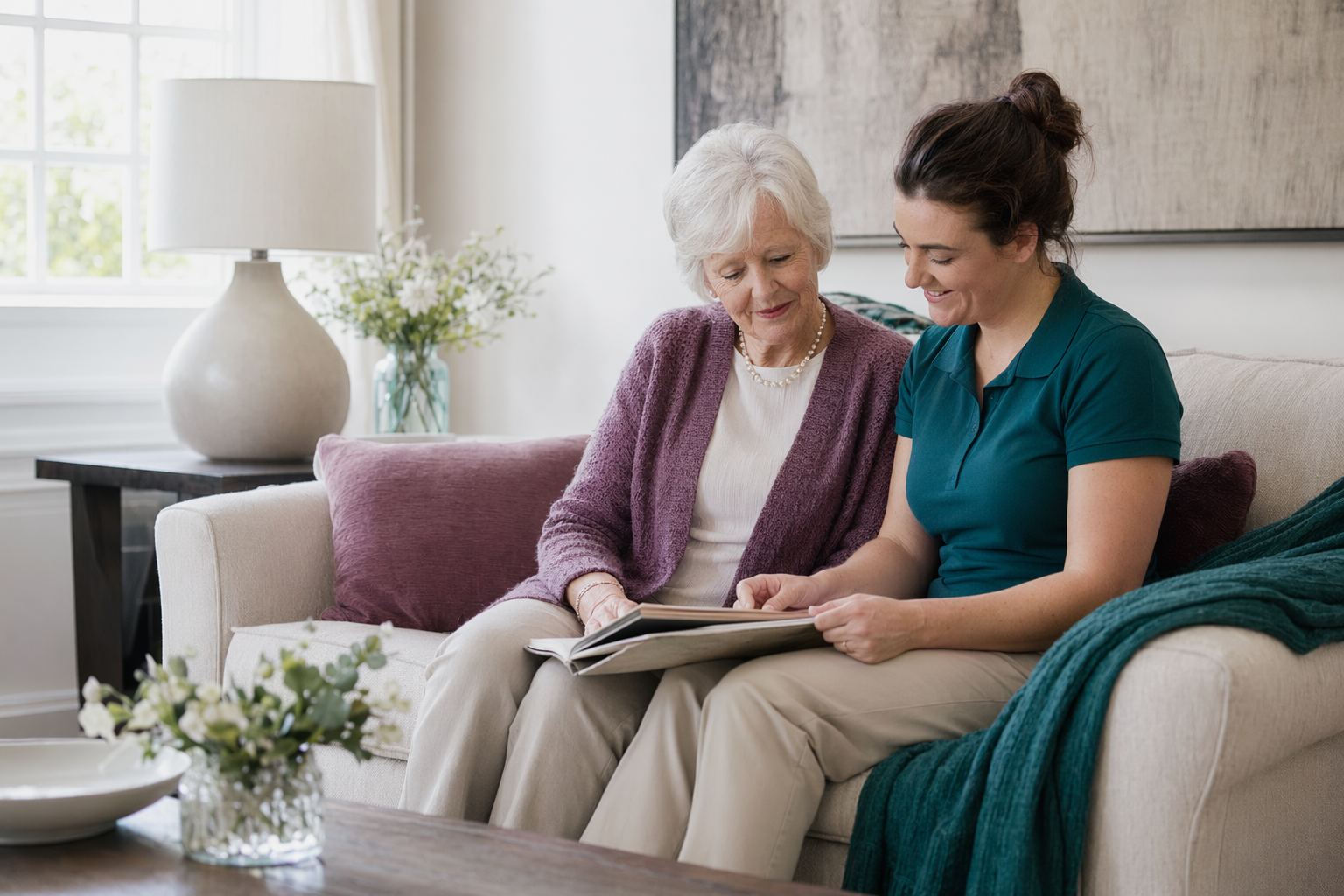
Starting with the basics
The family shared only general information: who the care was for, the city, the kind of help they wanted, the language they preferred, and the best way to reach them. They did not have to share medical records or a long health history.
That first conversation focused on plain questions. Did they want companionship, homemaking help, personal-care help, or a mix of support? Personal-care help means hands-on support with bathing, dressing, and mobility. Homemaking means help with cooking, cleaning, laundry, and errands. Respite care means short-term help that gives a family caregiver a break.
Sometimes the hardest part is just naming what is needed. The family realized they did not need 24-hour help right away. They needed a few hours a day at first, mostly for meals, light chores, and safe help after a recent fall.
Understanding cost without pressure
Like many families, they also had to think about cost. We explained that private-pay in-home care prices vary by city, state, hours, and level of support. Typical ranges can look like this: companion or homemaker help around $25-$40 per hour, personal-care aide support around $28-$45 per hour, and live-in or 24-hour care around $300-$450 per day.
We made it clear that these are only general planning ranges, not quotes. The family understood that the real cost would depend on how many hours they wanted and what kind of help was actually needed.
If you want a broader sense of pricing, you can also review our costs page. Many families find that even a small number of hours each week can make home feel much more manageable.
Getting matched with care that fit the family
After talking through the basics, Care Alongside helped the family get matched with providers who offered the type of private-pay non-medical care they were looking for. In some cases, families can also find caregivers who speak their own language, which can make the first visits feel less stressful and more comfortable.
The family then had a few conversations directly with providers. They asked practical questions about schedules, experience, and how the caregiver would help with daily routines. That back-and-forth helped them feel more grounded and less rushed.
Because Care Alongside is a free matching service, the family did not pay to use it. Participating providers pay us a flat fee. The family was able to compare options and decide what felt right for them.
What the family learned
The biggest takeaway was that arranging help at home does not have to happen all at once. The family learned that it is okay to start small, adjust later, and ask clear questions before agreeing to anything.
They also learned that private-pay in-home care is flexible. Some families want a few hours of companionship and homemaking. Others need personal-care support. Some need overnight help or live-in support. The right plan depends on the person, the home, and the family’s budget.
If you are in a similar place, you can get matched when you are ready. There is no pressure to decide everything at once.
A gentle reminder
Every family’s situation is different. Costs, availability, and care options vary by state and by provider. What helped this family may not be the exact same path for yours.
What is often the same is the feeling: worry, uncertainty, and the wish to do right by a parent. It is normal to take time. It is also normal to ask for help.
For more real-life examples and plain-language guidance, visit our stories page.
After a fall, one family used Care Alongside to understand private-pay in-home care, compare options, and get matched for free.
Questions families ask
Did Care Alongside arrange Medicare or Medicaid home care for this family?
What kind of help was the family looking for?
How much did this cost?
Do families have to share medical records to get matched?
Find the right help, with someone in your corner
Tell us what your family needs. We'll match you, free, with vetted in-home care providers near you — including ones who can speak your language. No medical records, no pressure.
Get matched, freeFree for families. No medical records. No pressure.